US12716685 - Techniques for determining a grip layout to improve gun ergonomics
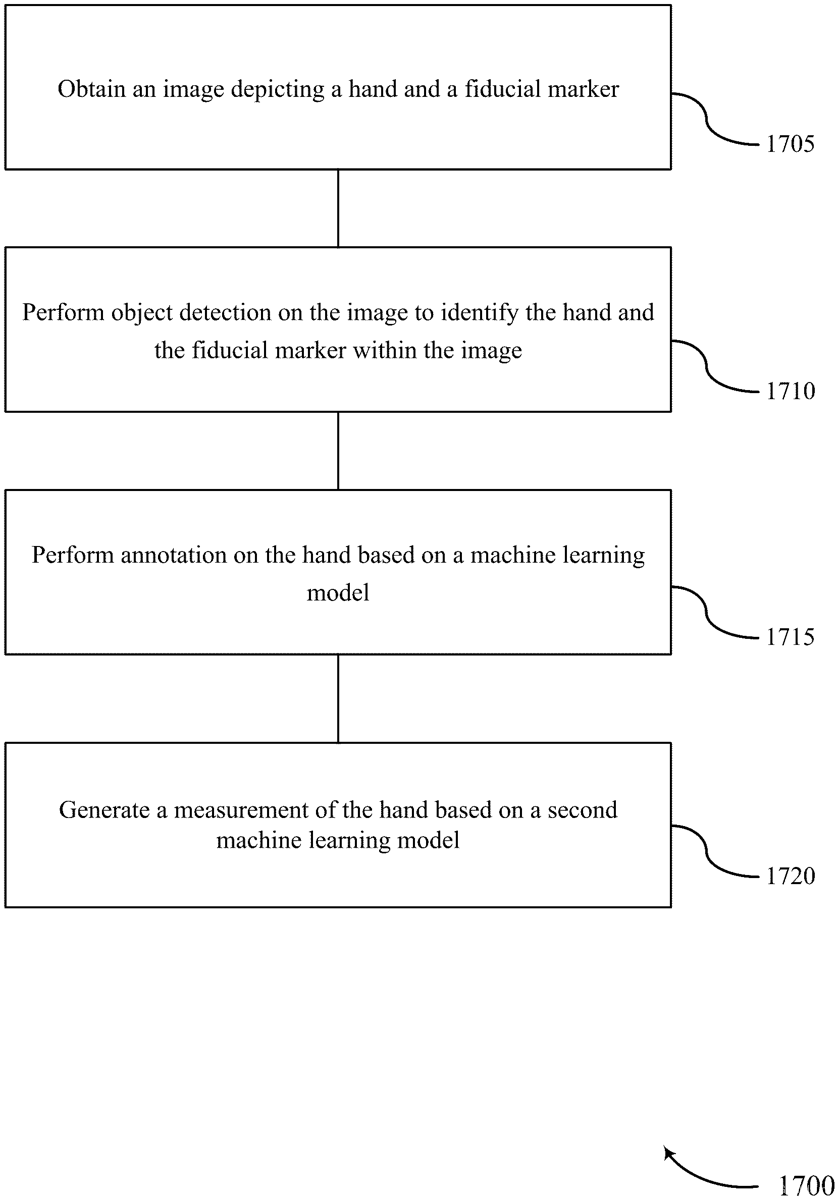
The patent describes a method for determining an ergonomic grip layout for firearms by analyzing images of a user’s hand using machine learning techniques. This process involves measuring hand dimensions, predicting handedness, and selecting appropriate features such as sensor location and backstrap size to enhance user comfort and control.
Claim 1
1 . A method of determining a grip layout for a gun, the method comprising: obtaining an image depicting a hand and a fiducial marker; performing object detection on the image to identify the hand and the fiducial marker within the image; performing annotation on the hand based on a machine learning model that has been trained with a first set of training data including multiple images containing hands, wherein each image of the multiple images of the first set of training data is annotated; generating a measurement of the hand based on a second machine learning model that has been trained with a second set of training data including multiple images containing hands, wherein each image of the multiple images of the second set of training data is labeled with a measurement; generating a handedness prediction based on a third machine learning model that has been trained with a third set of training data including multiple images containing hands, wherein each image of the multiple images of the third set of training data is labeled as a left hand or a right hand; and selecting (i) a sensor location for the gun based on the handedness prediction and (ii) a backstrap size for the gun based on the measurement of the hand. obtaining an image depicting a hand and a fiducial marker; performing object detection on the image to identify the hand and the fiducial marker within the image; performing annotation on the hand based on a machine learning model that has been trained with a first set of training data including multiple images containing hands, wherein each image of the multiple images of the first set of training data is annotated; generating a measurement of the hand based on a second machine learning model that has been trained with a second set of training data including multiple images containing hands, wherein each image of the multiple images of the second set of training data is labeled with a measurement; generating a handedness prediction based on a third machine learning model that has been trained with a third set of training data including multiple images containing hands, wherein each image of the multiple images of the third set of training data is labeled as a left hand or a right hand; and selecting (i) a sensor location for the gun based on the handedness prediction and (ii) a backstrap size for the gun based on the measurement of the hand.
Google Patents
https://patents.google.com/patent/US12716685
USPTO PDF
https://image-ppubs.uspto.gov/dirsearch-public/print/downloadPdf/12716685