US12723845 - Methods and device for autonomous missile control
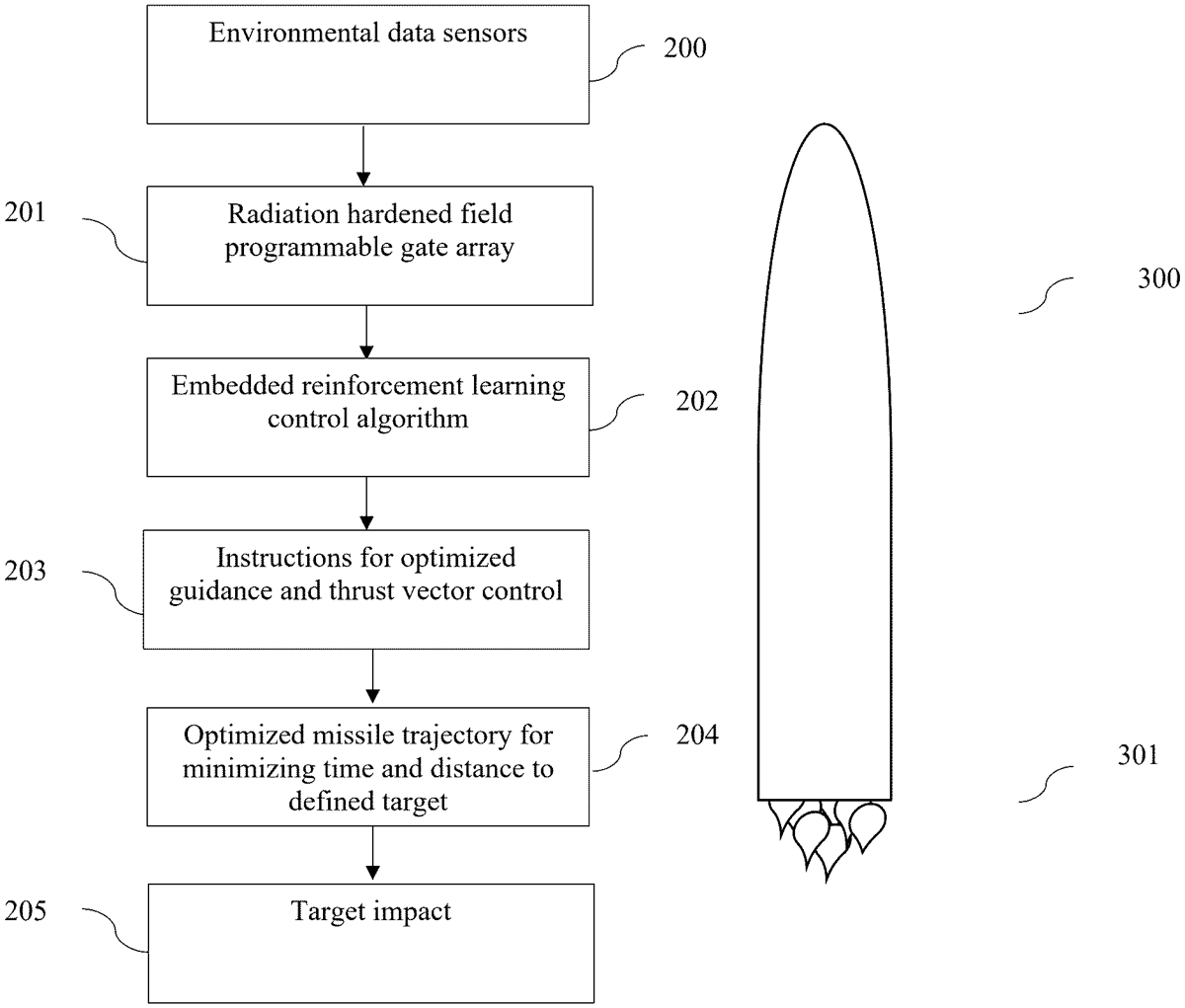
The patent describes a method for autonomous missile control that utilizes environmental data collected by sensors and processed through a deep reinforcement learning algorithm to optimize trajectory and target engagement. This technology aims to enhance guidance and collision avoidance, ensuring successful target impact regardless of external conditions.
Claim 1
1 . A method for autonomous missile control, the method comprising: engaging in a trajectory toward a missile target by a missile, using data sensors, receiving data about the trajectory, processing the data in a radiation hardened field programmable gate array, generating a visual mechanism for action value calculation by a reinforcement learning algorithm further receiving the action value calculation in real-time, generating instructions for commanding thrust vector controls by a reinforcement learning algorithm, manipulating the missile body in attitude, roll, pitch, and yaw by thrust vector controls, optimizing guidance and enabling collision avoidance using artificial intelligence technology, the artificial intelligence technology further comprising a neural network and a reinforcement learning computer program, combining a neural network and reinforcement learning algorithm using a deep q-network, controlling the missile during powered flight by a deep q-network, minimizing distance and time from the missile target by thrust vector controls optimized by a reinforcement learning algorithm, and successfully colliding with the missile target directly. engaging in a trajectory toward a missile target by a missile, using data sensors, receiving data about the trajectory, processing the data in a radiation hardened field programmable gate array, generating a visual mechanism for action value calculation by a reinforcement learning algorithm further receiving the action value calculation in real-time, generating instructions for commanding thrust vector controls by a reinforcement learning algorithm, manipulating the missile body in attitude, roll, pitch, and yaw by thrust vector controls, optimizing guidance and enabling collision avoidance using artificial intelligence technology, the artificial intelligence technology further comprising a neural network and a reinforcement learning computer program, combining a neural network and reinforcement learning algorithm using a deep q-network, the artificial intelligence technology further comprising a neural network and a reinforcement learning computer program, combining a neural network and reinforcement learning algorithm using a deep q-network, controlling the missile during powered flight by a deep q-network, minimizing distance and time from the missile target by thrust vector controls optimized by a reinforcement learning algorithm, and successfully colliding with the missile target directly.
Google Patents
https://patents.google.com/patent/US12723845
USPTO PDF
https://image-ppubs.uspto.gov/dirsearch-public/print/downloadPdf/12723845