Sep 9, 2025
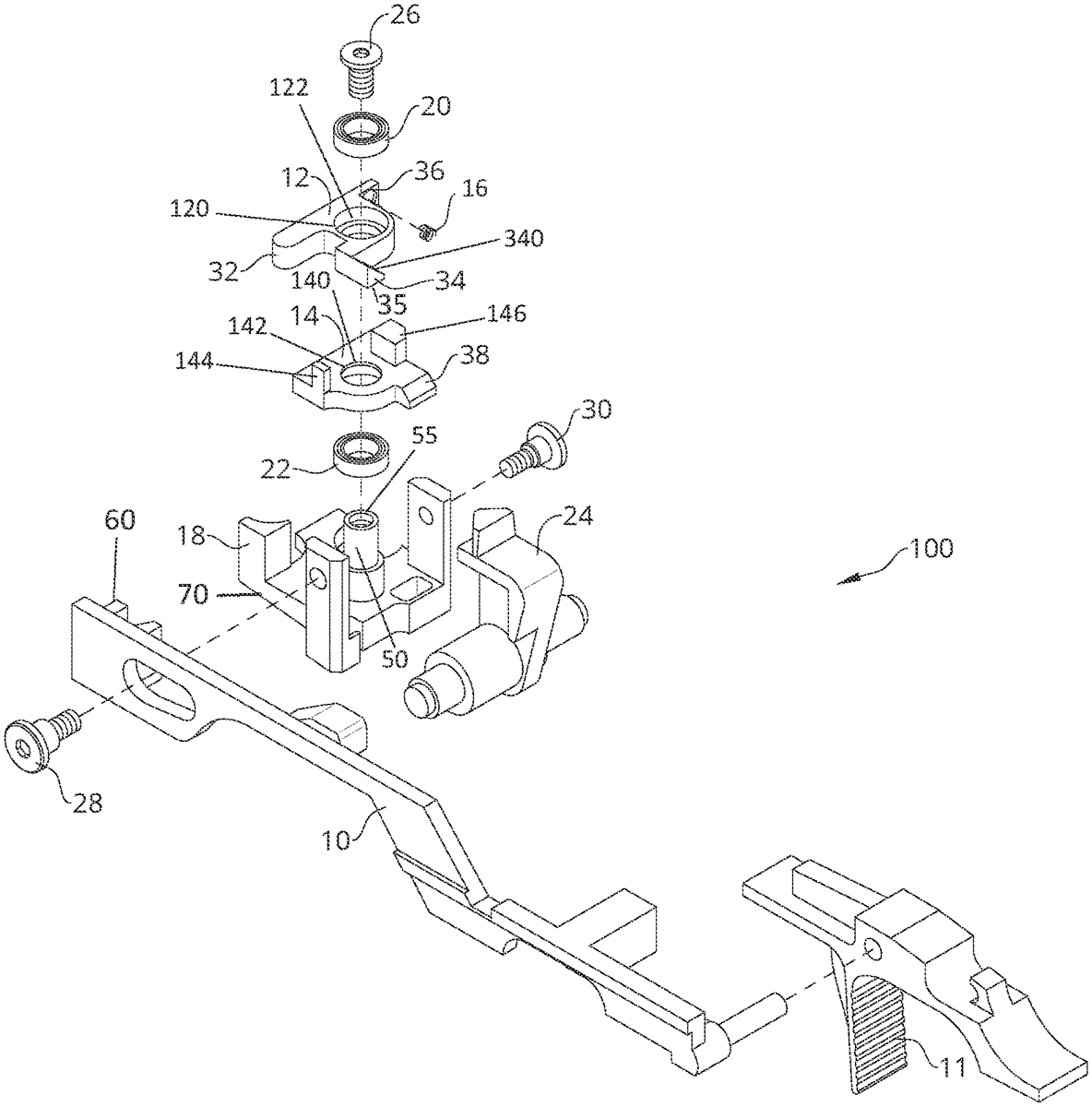
A drop-in system for a semiautomatic firearm trigger includes a trigger-locking block, a hump block, a trigger-locking block transfer bar and an axis retainer plate that operate together to enhance the operations of a semiautomatic firearm trigger. The trigger-locking block is pivoted on a firearm safety pin to lock the trigger when the carrier bolt travels rearward, the hump block is pivotally disposed within a trigger cradle on a trigger pin to receive a force of a hammer to rotate rearward to rotate the trigger assembly backward, the trigger-locking block transfer bar slides along carrier bolt guide and rotate the trigger-locking block forward to releasee the trigger, and the axis retainer plate holds the trigger-locking block rotatably in place and limits the rotation of the trigger-locking block.
Sep 2, 2025
The invention relates to an electronic device that is used to block the accessibility of a firearms Trigger. Wherein an electronic device is mounted on a rail or rail accessory and is locked in place using a lock and frame allowing the device to fit an array of firearms. The lock and frame are in place to stop easy removal unless the possessor has the key to remove them. The device its self uses a battery to operate and picks up a transmission broadcasted from a Bluetooth within its programmed range by the use of a Bluetooth proximity detector. Once the transmission has been picked up it activates its locking mechanism in the form of a solenoid causing its pin to shift and allows a slide placed in front of the trigger acting as a second trigger to move back and forth allowing the movement of the firearms trigger. The slide is moved back into its original position by the use of a spring. When the Bluetooth is out of the device's proximity detectors programmed range, the solenoid returns to its locked state stopping access to the trigger. Making the trigger locking device a beneficial reusable safety device.
Aug 19, 2025
A firearm spade grip assembly can comprise a firearm, paddle trigger assembly, and/or a mounting system. A paddle trigger assembly can comprise a base spanning between and comprising a base forward end and a base aft end; a paddle trigger coupled to the base; a trigger actuator coupled to the base; and/or an actuator housing coupled to and extending forward from the base, wherein the trigger actuator is disposed at least partially within the actuator housing. Movement of the paddle trigger can be configured to translate the trigger actuator. A mounting system of a firearm spade grip assembly can comprise a mounting base configured to couple to a firearm receiver base or a firearm receiver of the firearm.
Aug 12, 2025
A modular trigger control unit Is configured to be removably installed on a grip frame of a firearm and includes a locking block and a pin configured to traverse through both the trigger control unit and the grip frame. The trigger control unit has a protruding tab protruding rearward. The locking block includes slide rails extending forward, with each slide rail of the pair of slide rails having a flat wall extending downward or upward with respect to the grip frame when the trigger control unit is installed on the grip frame. The trigger control unit is secured to the grip frame by: (1) the protruding tab received in a recess on an interior wall of a beavertail portion of the grip frame; (2) the pin; and (3) one or more first physical features on the trigger control unit mating with one or more second physical features on the grip frame.
Aug 12, 2025
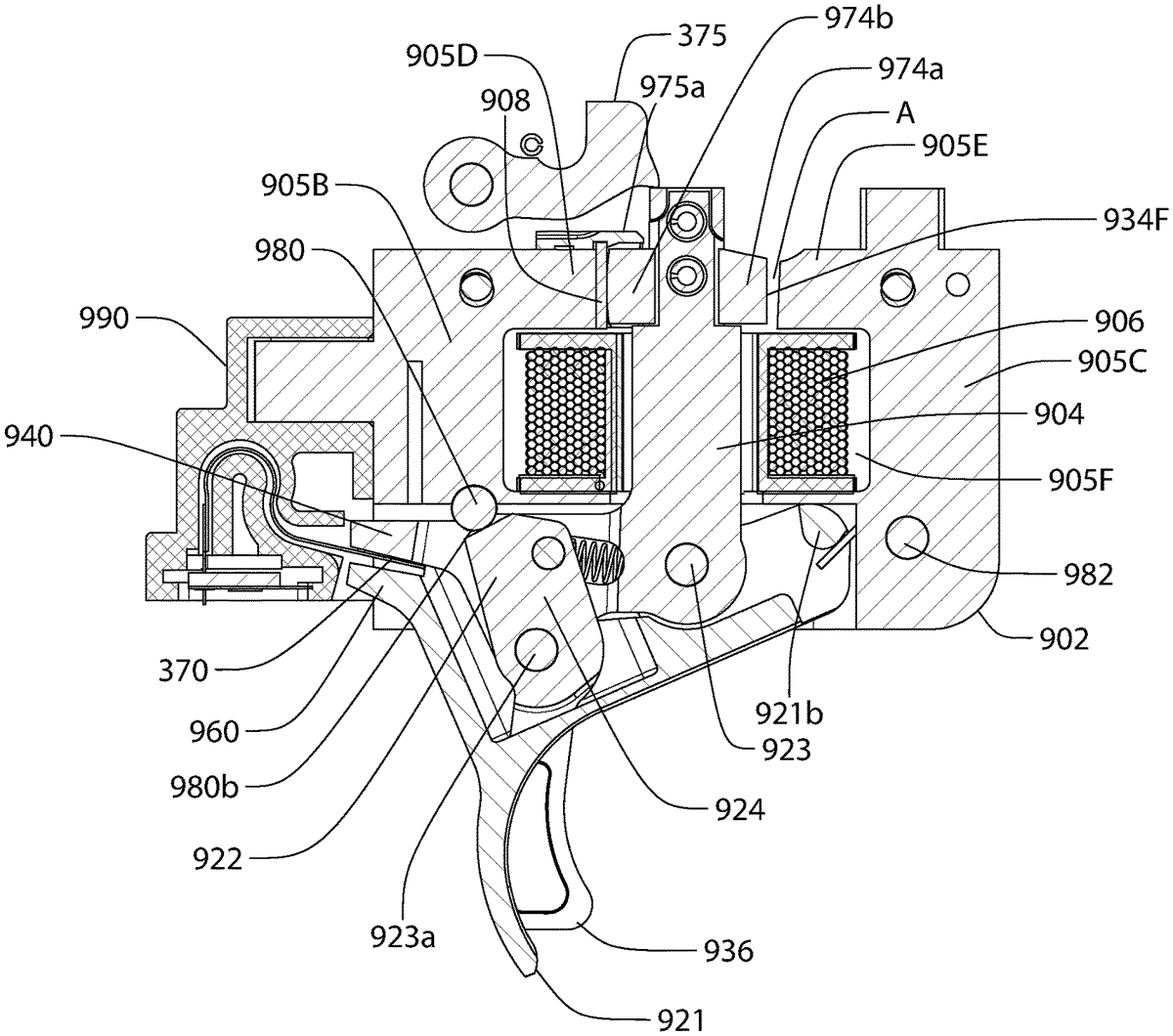
An electronic trigger system with safety mechanism for firearms includes a trigger unit comprising an electromagnetic actuator operably coupled to the firing mechanism and a programmable trigger mechanism microcontroller. The actuator is changeable between a non-powered unactuated position and powered actuated firing position via pulling both an outer trigger and inner safety trigger of the trigger unit. The actuator is operably interfaced with a movable firing component of the firing mechanism operable to discharge the firearm. In a blocking position of the safety trigger, the safety trigger is configured to block outer trigger movement which prevents energizing and actuating the electromagnetic actuator thereby preventing the firearm from discharging. Conversely in an unblocking position, the safety trigger allows outer trigger movement sufficient to discharge the firearm by either energizing the actuator when a pre-selected trigger pull force threshold is applied or applying sufficient trigger force to manually trip the actuator.
Aug 12, 2025
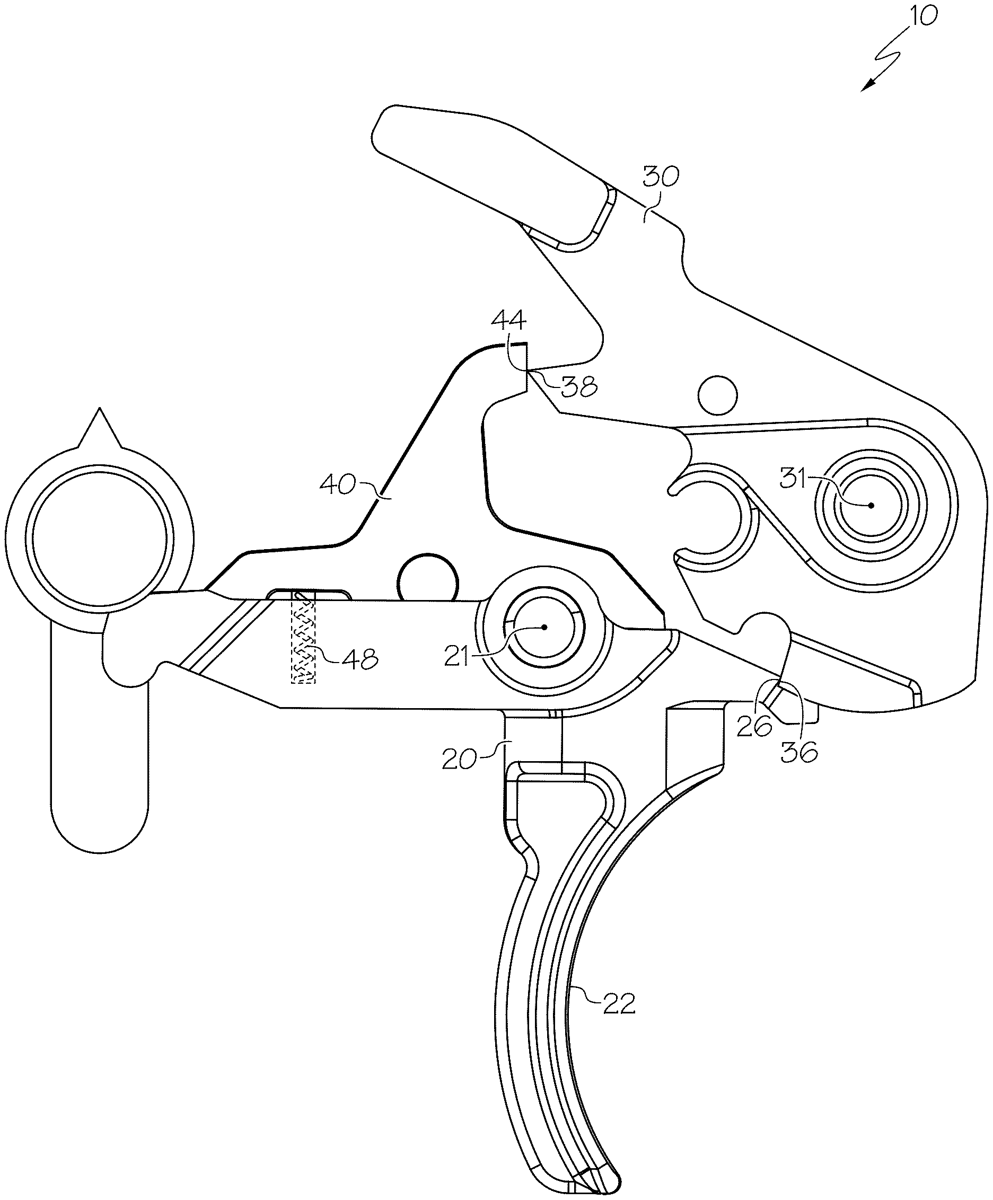
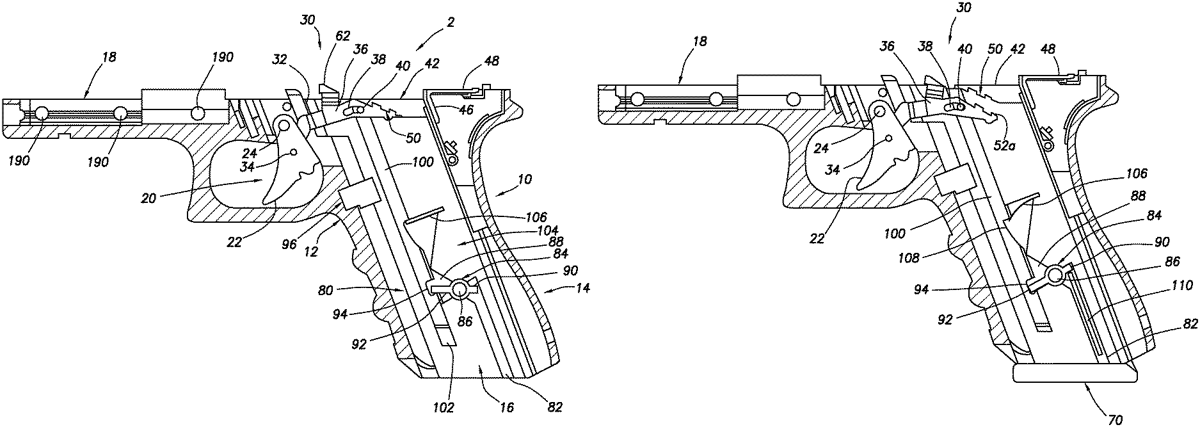
In some embodiments, a fire control mechanism comprises a trigger, a hammer and a disconnector. The trigger comprises a trigger sear and is arranged to rotate about a trigger axis. The hammer comprises a hammer sear and a secondary sear and is arranged to rotate about a hammer axis. The disconnector comprises a disconnector sear and is arranged to move with respect to the trigger. The fire control mechanism comprises an orientation wherein the trigger sear contacts the hammer sear and the secondary sear contacts the disconnector sear.
Aug 5, 2025
The invention relates to an electronic device that is used to block the accessibility of a firearms Trigger. Wherein an electronic device is mounted on a rail or rail accessory and is locked in place using a lock and frame allowing the device to fit an array of firearms. The lock and frame are in place to stop easy removal unless the possessor has the key to remove them. The device its self uses a battery to operate and picks up or sends a broadcasted transmission within a programmed range by the use of a printed circuit board (PCB) capable of receiving or sending a broadcasted transmission. Once the transmission has been picked up or sent and received it activates the electronic devices locking mechanism in the form of a electromechanical mechanism causing it to shift and allows a slide placed in front of the trigger acting as a second trigger to move back and forth allowing the movement of the firearms trigger. The slide is moved back into its original position by the use of a spring driven mechanism. When the worn device or the electronic device is out of the programmed range, the electromechanical mechanism returns to its locked state stopping access to the trigger. Making the trigger locking device a beneficial reusable safety device.
Aug 5, 2025
A trigger system having a detachable trigger shoe. The trigger shoe is made detachable from the trigger bow while the trigger bow remains in an installed state within the pistol. A selectable detachment feature is provided for the connection between the trigger shoe and the trigger bow. The user can activate this detachment feature and remove the shoe while leaving the trigger bow in place. The user can then install a different trigger shoe while the trigger bow remains in place.
Aug 5, 2025
Jul 29, 2025
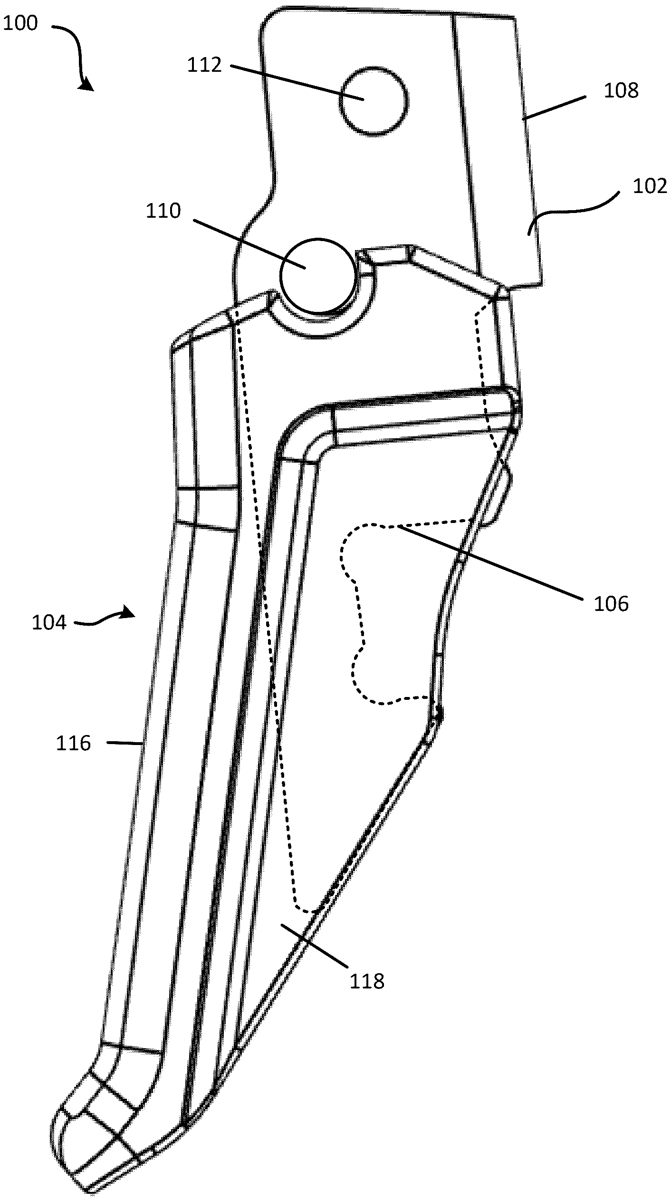
A handgun trigger has a trigger body configured for pivotable or rotatable movement when installed in a handgun. A trigger shoe is removably attached or attachable to the trigger body and defines a user interface for firing the handgun. The trigger shoe can be made of polymeric material and can be attached to the trigger body using a snap fit. For example, the trigger shoe snaps over rear-facing surfaces of the trigger body when installed. Also disclosed is a takedown lever assembly for a semiautomatic handgun, where the takedown actuation lever operable between a firing position and a takedown position. In the takedown position the takedown actuation lever permits removal of the slide from the frame. In the takedown position the trigger is blocked from rotating to the pulled trigger position.
Jul 29, 2025
Trigger assembly with a trigger shoe, a trigger bow, and a set screw.
Jul 29, 2025
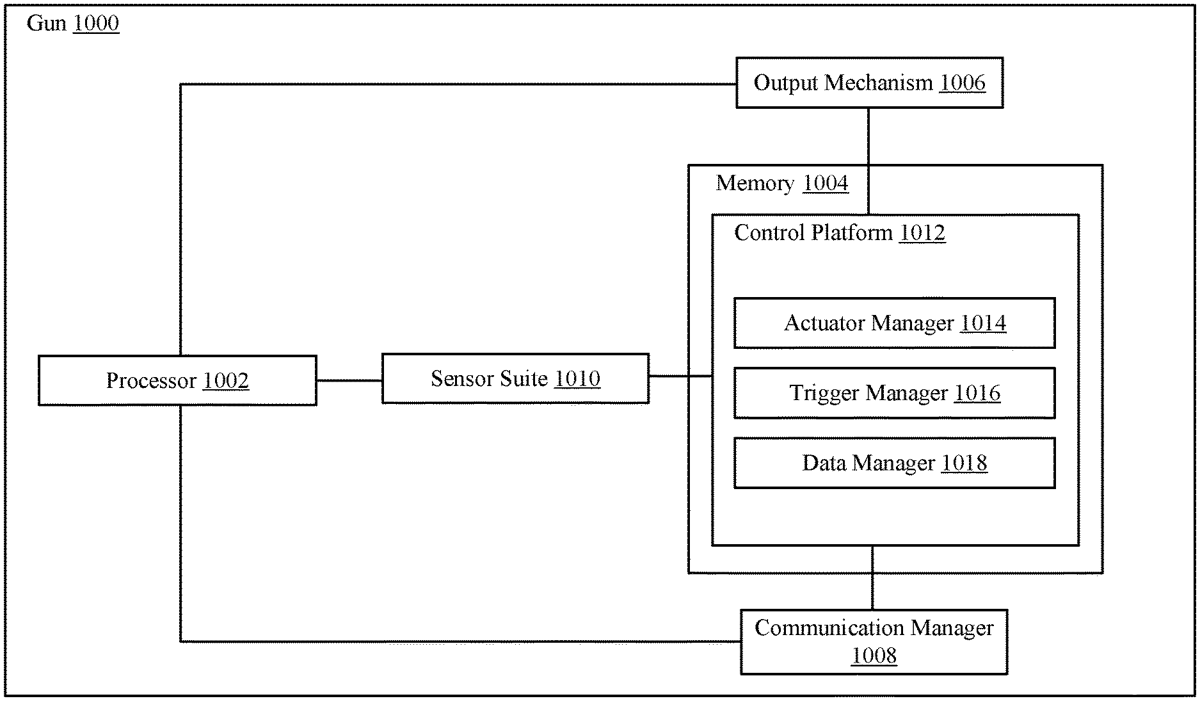
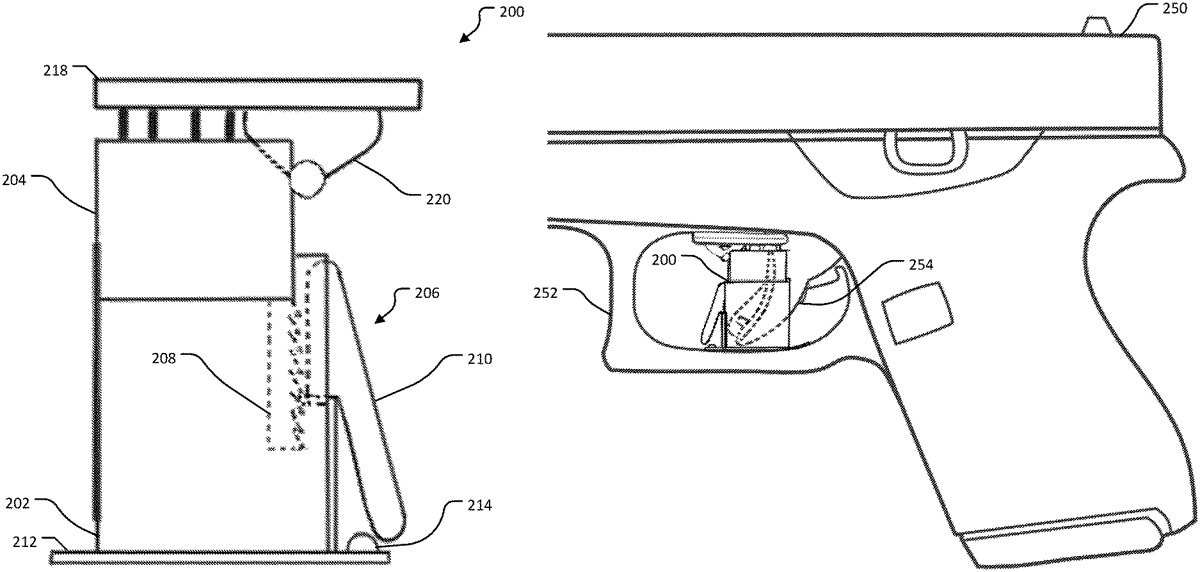
The present disclosure provides systems and techniques for a fire control mechanism that is implementable in a gun. The fire control mechanism is operable to cause projectiles to be fired by the gun. The gun may include a trigger, a barrel defining a bore axis, a firing component, and an actuator configured to i) obstruct the firing component while in a default position and ii) be displaced in a direction that is substantially perpendicular to the bore axis in response to movement of the trigger, where displacement in the direction that is substantially perpendicular to the bore axis causes the firing component to be released and results in the gun firing a projectile. The gun may include an energy store located below the barrel when the gun is in an upright position, and the actuator may be displaced based on the energy store.
Jul 29, 2025
An auto-loading firearm having a live fire mode, in which the firearm operates to discharge, and a training mode in which the firearm does not discharge. In the training mode, the firearm provides for resetting the trigger after simulated firing of the firearm.
Jul 22, 2025
Jul 8, 2025
A loaded-chamber indicator firearm trigger device is provided. The device is comprised of a firearm with a trigger (or only a trigger in one embodiment), wherein the trigger is comprised of an exterior side surface with at least one indicia. The indicia is only visible outside of the frame of the firearm when the firing pin of the firearm is engaged (which causes the portion of the trigger the indicia is positioned on to move outside of the frame of the firearm). As a result, the observability of the indicia on the trigger indicates the firearm has an engaged firing pin and is ready to fire.
Jul 1, 2025
A self-loading pistol with a pre-cocked firing pin and with an assembly for safe disassembling, comprising a trigger bar ( 7 ) with a peripherally at least partly closed frame part ( 7 c ) to surround a pistol magazine ( 39 ). The frame part ( 7 c ) having, with respect to the shooting direction, a vertical surface ( 7 m ) arranged on its rear side, and on the front side, a lug ( 7 f ) for catching a firing pin ( 3 ). The trigger bar ( 7 ) is arranged in the pistol frame on a cross pin ( 29 ) that crosses the vertical surface ( 7 m ). The trigger bar ( 7 ) is moveable by means of a trigger ( 15 ). In the pistol frame, over the trigger bar ( 7 ), a disassembling lever ( 11 ) is arranged that has a button ( 11 d ) and a pivot ( 11 a ) that carries a cam ( 18 ) for engagement with the trigger bar ( 7 ). The cross pin ( 29 ) passes through a guide cam ( 7 e ) arranged in the vertical surface ( 7 m ). The vertical surface ( 7 m ) has, at its side facing the magazine ( 39 ), a contact surface ( 7 i ) for the magazine ( 39 ). An arm ( 7 k ) protrudes from the frame part ( 7 c ) at its front side with respect to the shooting direction. A pulling thumb ( 7 a ) and at a distance from it, a support stop ( 7 j ) being arranged at the free end of the arm ( 7 k ). The cam ( 18 ) has a nose ( 18 a ) at one side and a protrusion ( 18 b ) at the opposite side. The nose ( 18 a ) reaches between the pulling thumb ( 7 a ) and the supporting stop ( 7 j ) of the trigger bar ( 7 ). The protrusion ( 18 b ) is bringable into a recess ( 1 a ) at the facing side of the slide ( 1 ).
Jul 1, 2025
Embodiments of the present disclosure relate to trigger mechanisms for firearms. In one aspect of the present disclosure, the trigger mechanism can include a linkage between a striker sear and a main sear to control an amount of force exerted on the main sear by the striker sear. A portion of the force exerted on the striker sear by the striker can be exerted on the main sear through the sear linkage. In another aspect of the present disclosure, trigger mechanisms are described which additionally, or alternatively utilize one or more biasing members to provide a variable trigger pull weight.
Jun 24, 2025
In some embodiments, a fire control mechanism comprises a hammer, a trigger and a safety. The hammer is rotatable about a hammer axis. The trigger is rotatable about a trigger axis and arranged to contact the hammer. The safety is arranged to interfere with rotation of the trigger. The safety comprises a second portion moveable with respect to a first portion.
Jun 17, 2025
A plurality of trigger blocks are described. Embodiments of the trigger block can be implemented as a collapsible trigger block adapted to shroud a trigger to aid in preventing accidental discharges of a firearm. The collapsible trigger block can implement a linear ratchet assembly and a stop to secure the collapsible trigger block inside a trigger guard of a firearm.
Jun 10, 2025
A firearm, including a hammer, a safety lever configured to select an operation mode, a trigger, an electromechanical sear, wherein the operation modes include an electromechanical mode, and the firearm is configured so that when changing to the electromechanical mode the safety lever moves the position of the hammer to be held by the electromechanical sear instead of by the trigger. Likewise when changing the operation mode from the electromechanical mode to other modes the safety lever moves the position of the hammer so that the hammer. is released from the electromechanical sear and held by the trigger.
Jun 10, 2025
A trigger relocation assembly for a modern sporting firearm includes a frame enclosing a trigger of the modern sporting firearm, an assembly trigger within the frame, the assembly trigger positioned forward of the trigger, an asymmetrical transfer bar coupled to transfer movement of the assembly trigger one-to-one to the trigger, and a plurality of bushings. The bushings are configured to guide the transfer bar within the frame.
Jun 3, 2025
A trigger mechanism assembly for a firearm provides a horizontal arrangement of its sear relative to a trigger of the firearm by way of a linkage bar. The sear and a disconnector share a pivot point, wherein at each engagement surface between the pivot point and the sear and the disconnector, respectively, there is a bearing. A pair of mandibles is provided, one mandible by each of the sear and the disconnector. A spring is operatively associated between the sear and the disconnector to bias them to rotate about the pivot point dependently, whereby a first distance between the pair of mandibles is maintained. An inclined surface is provided along at least one mandible so that a downward force urged by a hammer against the inclined surface moves the disconnector independently of the sear, whereby a second distance between the pair of mandibles is greater than the first distance.
Jun 3, 2025
A pistol comprises a barrel connected to a frame that has a grip portion defining an elongated magazine well. A magazine defining a plurality of chambers is removably receivable within the well. A trigger assembly connected to the frame engages a magazine with a follower or cam surface by which trigger assembly advances the magazine within the well and indexes the magazine along its length to sequentially align each chamber with the barrel, and sequentially discharge each cartridge in the magazine. The follower elements may be arranged parallel to the length of the magazine so that each may be associated with a particular chamber. A “safety” condition is effectible by pushing a loaded magazine downward and into a concealable condition with its chambers out of alignment with the gun barrel and wherein a transfer bar safety blocks the hammer from inserting its firing pin into a magazine chamber.
May 27, 2025
A mechanism using flexure hinges as part of the trigger and/or safety mechanism of a firearm. Flexure hinges provide relative motion between two stiff members by the elastic deformation of an arbitrarily shaped flexible connector often implemented in metallic and composite materials. The flexure hinges are formed by flexure links connecting two stiff members. The flexure links connect various parts of the trigger assembly, such as a trigger component, including a shoe, plate, or safety, to a housing of the firearm. A method of creating the mechanism provides a trigger component, a housing, and connects the two parts by a flexure link with a flexure hinge.
May 20, 2025
A magazine catch safety for a firearm to lock a trigger of a firearm when a magazine is removed from a magazine receptacle of a frame of a firearm, the magazine catch safety having a catch body having a longitudinal axis, an actuating button end, and a spring receiving end, and a protuberance disposed on the catch body. The magazine catch safety further having a securement pin, a spring, and a trigger bow. The trigger bow has a notch, wherein, when the catch body is in a first position, the protuberance is engaged in the notch to prevent movement of the trigger bow, and wherein when the catch body is in a second position, the protuberance of the catch body does not engage the notch, providing for free movement of the trigger bow.
May 20, 2025
An operating system for a firearm includes a trigger, a hammer, a disconnector, a pivoting arm, and a lower member. The trigger includes a lower portion, an upper portion, and a trigger pivot. The disconnector includes a lower portion, an upper portion, and a disconnector pivot. The pivoting arm includes a forward protrusion, a pivoting arm opening, and a pin extending through the pivoting arm opening. The lower member includes a lower member opening and a pin hole that is coaxial with the trigger pivot and the disconnector pivot. At least a portion of the trigger and at least a portion of the disconnector are disposed within the lower member opening. Motion of the trigger causes the forward protrusion of the pivoting arm to engage a bolt carrier group and hold the bolt carrier group in an open position.
May 20, 2025
An off-trigger safety training device for firearms and method of use. The off-trigger safety training device is removably attached to a firearm proximal to a trigger of the firearm. The off-trigger safety training device is positioned for longitudinal alignment with a barrel of the firearm and includes a concave recess oriented in alignment with the barrel of the firearm for receiving the operator's trigger finger. Longitudinally extending ribs protrude from a face of the concave recess permit the user to align their finger within the concave recess and receive a complementary longitudinal tactile engagement with the ribs for positive engagement of the trigger finger with the off-trigger safety training device.
Apr 22, 2025
A trigger assembly includes a housing a sear moveably connected to the housing; and a trigger piece connected to the housing and moveable between a cocked position and a firing position; the trigger piece including a trigger shoe configured to contact a user in moving from the cocked position to the firing position; the trigger piece being configured to rotate about a first axis of rotation and an orthogonal second axis of rotation in moving from the cocked position to the firing position.
Apr 15, 2025
A trigger mechanism that can be used in AR-pattern firearms has a hammer, a trigger member, a disconnector, a locking member, and a “three position” safety selector having safe, standard semi-automatic, and forced reset semi-automatic positions. In the standard semi-automatic position, rearward movement of the bolt carrier causes rearward pivoting of the hammer such that the disconnector hook catches the hammer hook, at which time a user must manually release the trigger member to free the hammer from the disconnector to permit the hammer and trigger member to pivot to the set positions so that the user can pull the trigger member to fire the firearm. In the forced reset semi-automatic position, rearward movement of the bolt carrier causes rearward pivoting of the hammer causing the trigger member to be forced to the set position, the safety selector preventing the disconnector hook from catching the hammer hook, and thereafter when the bolt carrier reaches the substantially in-battery position the user can pull the trigger member to fire the firearm without manually releasing the trigger member. The locking member is pivotable between a first position at which the locking member mechanically blocks the trigger member from moving to the released position and a second position at which the locking member does not mechanically block the trigger member allowing the trigger member to be moved to the released position. The locking member is spring biased toward the first position and moved against the spring bias to the second position by contact from the bolt carrier during forward movement of the bolt carrier as the bolt carrier reaches a substantially in-battery position.