Chamber

Patents tagged Chamber

Oct 20, 2026

US12768607 - Ballistic multi-part chamber locking assembly

Improvements in a ballistic with a multi-part chamber locking assembly is disclosed to allow the casing ejection and reloading sequence to be temporarily slowed down to capture the optimum amount of ignited gun powders expanding gas, prior to the round exiting the barrel. Large slide component(s) of a firearm are replaced with a multi-part chamber locking assembly. This negates the requirement for a round to move laterally after moving vertically. The round only moves vertically thus mitigating the requirement for any forward motion. The multi-part chamber reduces the weight and materials needed to actuate all components of the ejecting and reloading process, so more energy is available to transfer movement of casing ejecting. The round is fired with a hammer or striker through impingement or a firing pin actuated action on a primer to ignite the propellant.
Sep 22, 2026

US12742619 - Two-stage multiuse gun clearing and test trap with replaceable decelerant

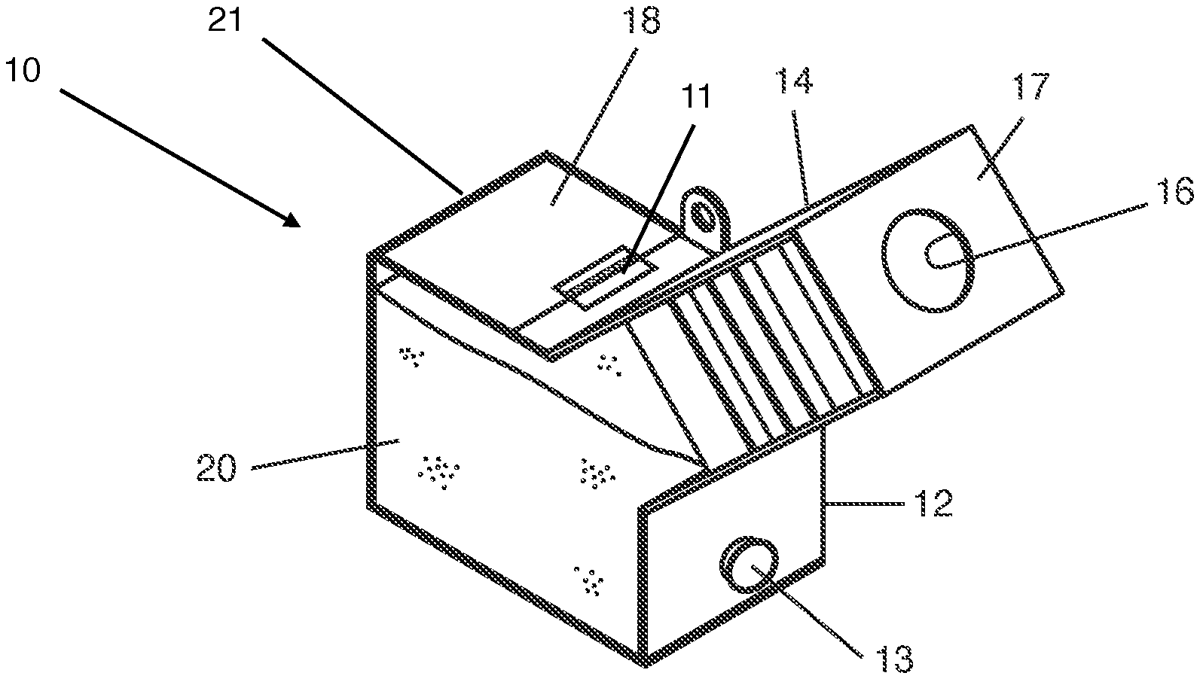
A reusable gun clearing and test trap has two chambers, a bullet capture chamber and an attached bullet inlet chamber to stop fired bullets, the capture chamber having at least one user-serviceable door for interior access to receive a bullet decelerant. An elastomeric mass such as blocks of compressed crumb rubber or vulcanized virgin rubber retardant is removably insertable into the inlet chamber for slowing the fired bullets. A slurry, such as a mixture of sand and oil such as is removably loadable into the capture chamber through a trap door and serves as the decelerant for the fired bullets. The capture chamber and the inlet chamber are made in a shape and of encasing materials that are sufficient to contain explosive discharges and ricochets associated with fired bullets. A labyrinth baffle is for dispersing discharge gases.

Jul 21, 2026

US12687360 - Chamber obstruction device for firearm

A device includes a locking mechanism that transitions between a locked state and an unlocked state. The locking mechanism has a first depressible member that actuates in a first direction and second depressible members that actuate in a second direction different than the first direction. Fastening mechanisms that secure the second depressible members to the device. A cover transitions between a first position in which the fastening mechanisms are obstructed and a second position in which the fastening mechanisms are unobstructed. The cover transitions from the first position to the second position in the unlocked state of the locking mechanism. A slide engages with the cover and permits transitioning of the cover from the first position to the second position.