US12782098 - Autonomous pyrotechnic igniter simulator
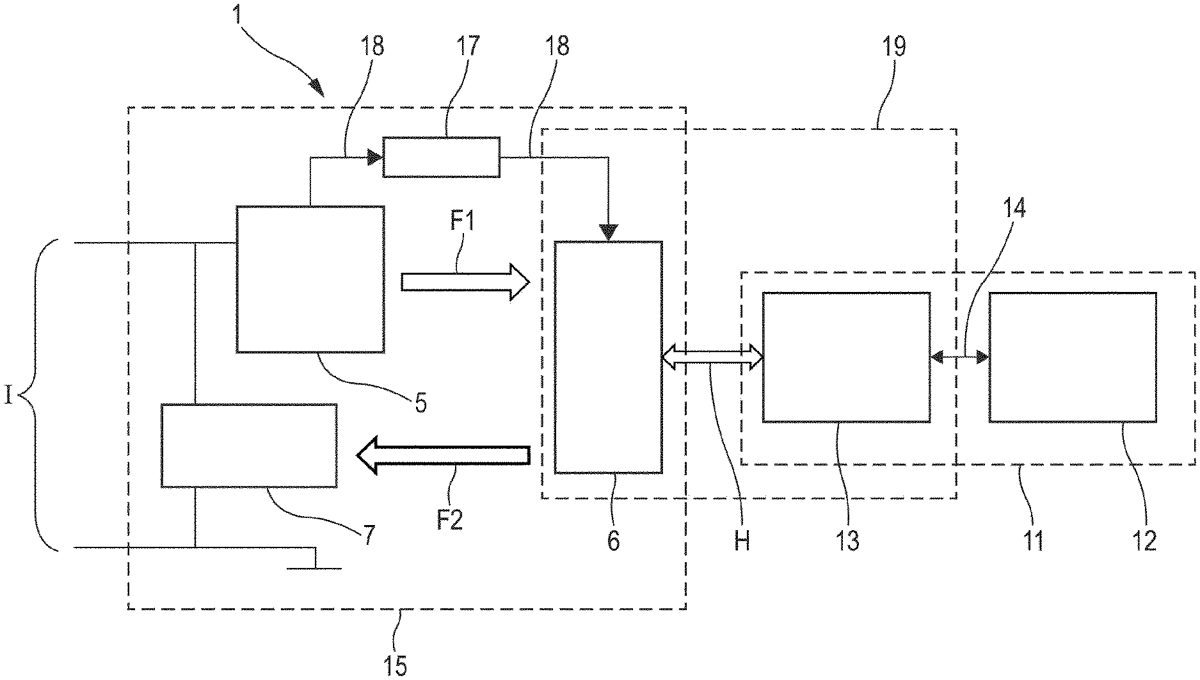
The autonomous pyrotechnic igniter simulator detects ignition pulses and utilizes a microcontroller to control an impedance block that simulates either activation or non-activation of an igniter based on the pulse characteristics. This device can be remotely configured and includes a charging element to power its electronic components by recovering energy from the received firing pulses.
Claim 1
1 . A pyrotechnical ignition device simulator, said simulator being suitable for receiving an electrical firing pulse for activating a pyrotechnic ignition device, said simulator comprising: a detection element capable of detecting at least one firing pulse received; a microcontroller able to determine one or more characteristics of the firing pulse detected by the detection element and to drive an impedance block as a function of this or these characteristics, said microcontroller being able to be configured remotely; said impedance block which is able to be simulated according to one of two different impedance values as a function of said characteristic or characteristics, one of said impedance values called high simulating an activation of the ignition device in response to the detected firing pulse and the other impedance value called low simulating an absence of activation of the ignition device in response to the detected firing pulse; and a charging element capable of recovering energy from a firing pulse received and charging a first energy reserve intended to supply electronic components of the simulator. a detection element capable of detecting at least one firing pulse received; a microcontroller able to determine one or more characteristics of the firing pulse detected by the detection element and to drive an impedance block as a function of this or these characteristics, said microcontroller being able to be configured remotely; said impedance block which is able to be simulated according to one of two different impedance values as a function of said characteristic or characteristics, one of said impedance values called high simulating an activation of the ignition device in response to the detected firing pulse and the other impedance value called low simulating an absence of activation of the ignition device in response to the detected firing pulse; and a charging element capable of recovering energy from a firing pulse received and charging a first energy reserve intended to supply electronic components of the simulator.
Google Patents
https://patents.google.com/patent/US12782098
USPTO PDF
https://image-ppubs.uspto.gov/dirsearch-public/print/downloadPdf/12782098