US12296942 - Control surface locking system for tactical flight vehicle
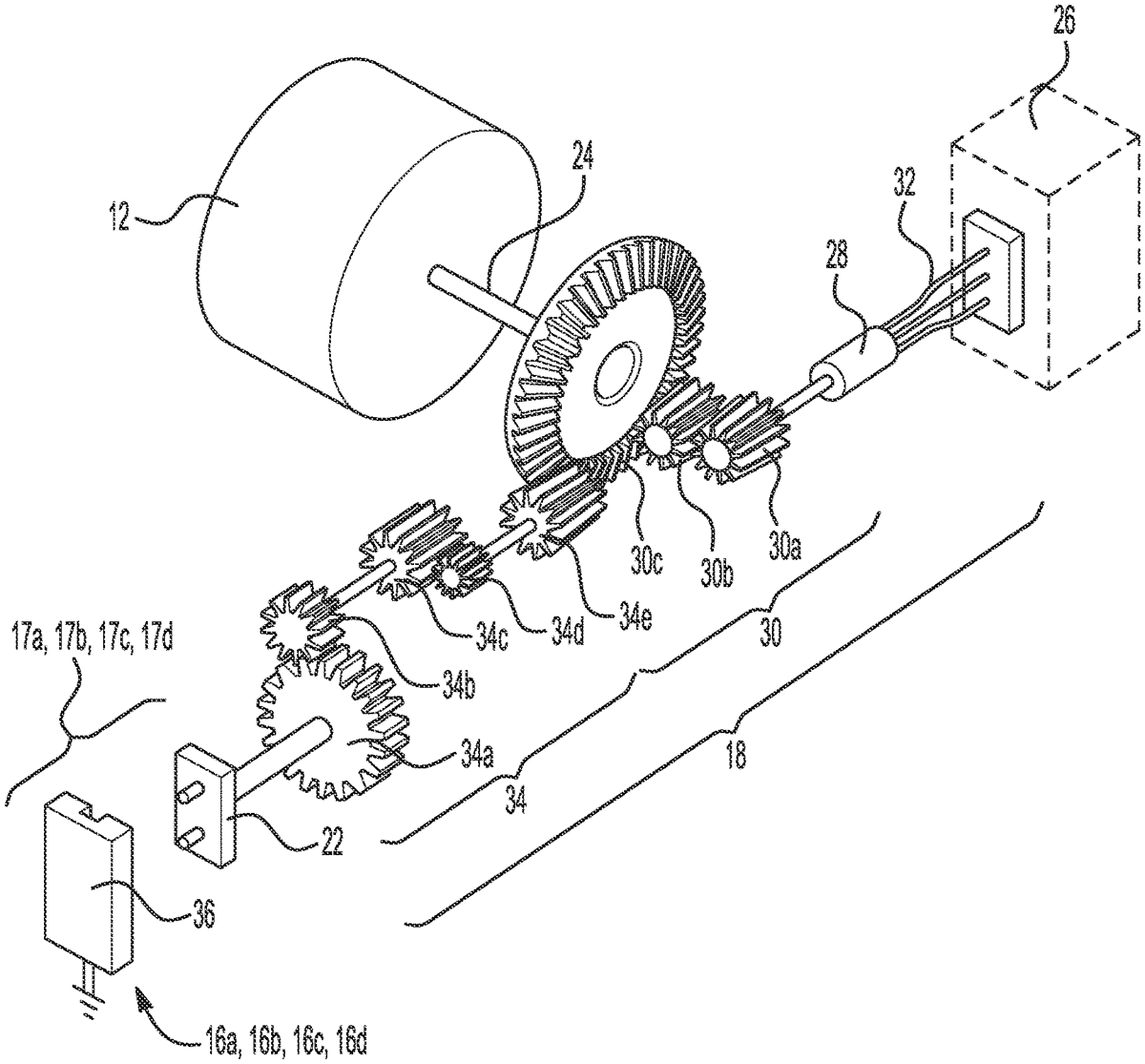
This patent describes a control surface restraining system designed for tactical flight vehicles, which prevents or allows movement of a control surface through a power take-off shaft and gear train mechanism. The system includes a control surface restraint that can variably engage or disengage the power take-off shaft, effectively locking or unlocking the movement of the control surface.
Claim 1
- A control surface restraining system for preventing movement of a control surface imparted by a control actuation shaft of a control actuation section of a tactical flight vehicle, the control surface restraining system comprising: a power take-off shaft operably connected to the control actuation shaft with a power take-off gear train; and a control surface restraint configured to: engage the power take-off shaft, thereby locking the power take-off gear train and preventing the control actuation shaft from imparting the movement of the control surface, and disengage the power take-off shaft, thereby unlocking the power take-off gear train and allowing the control actuation shaft from imparting the movement of the control surface; a power take-off shaft operably connected to the control actuation shaft with a power take-off gear train; and a control surface restraint configured to: engage the power take-off shaft, thereby locking the power take-off gear train and preventing the control actuation shaft from imparting the movement of the control surface, and disengage the power take-off shaft, thereby unlocking the power take-off gear train and allowing the control actuation shaft from imparting the movement of the control surface; wherein the control surface restraint includes: a lock ring rotatable between a first position and a second position; a pin movable between a ring-engaged position in which the pin engages the lock ring and maintains the lock ring in the first position, and a ring-disengaged position in which the pin disengages the lock ring; a ring biasing member fixed to the lock ring and configured to move the lock ring from the first position to the second position when the pin is in the ring-disengaged position; and a control surface lock moveable between a shaft-engaged position in which the control surface lock engages the power take-off shaft, and a shaft-disengaged position in which the control surface lock disengages the power take-off shaft, the control surface lock being in the shaft-engaged position when the lock ring is in the first position and the control surface lock being in the shaft-disengaged position when the lock ring is in the second position. a lock ring rotatable between a first position and a second position; a pin movable between a ring-engaged position in which the pin engages the lock ring and maintains the lock ring in the first position, and a ring-disengaged position in which the pin disengages the lock ring; a ring biasing member fixed to the lock ring and configured to move the lock ring from the first position to the second position when the pin is in the ring-disengaged position; and a control surface lock moveable between a shaft-engaged position in which the control surface lock engages the power take-off shaft, and a shaft-disengaged position in which the control surface lock disengages the power take-off shaft, the control surface lock being in the shaft-engaged position when the lock ring is in the first position and the control surface lock being in the shaft-disengaged position when the lock ring is in the second position.
Google Patents
https://patents.google.com/patent/US12296942
USPTO PDF
https://image-ppubs.uspto.gov/dirsearch-public/print/downloadPdf/12296942